What a Pool Water Test Actually Tells You, and Why to Bring a Sample
A test is only useful if the sample is good and the next step is clear.
October 27, 2026 · 4 min read
Cloudy water, itchy eyes, a faint chemical smell, a pool that eats chlorine as fast as you add it. All of these have a cause, and the cause is almost never "add more chlorine." A water test is how you find out which number is off. It's also the cheapest repair you'll ever make on a pool.
What you're really measuring
Pool water is a balance, and the numbers push on each other. Change one and the others move. That's why a single reading, taken alone, can send you in the wrong direction. A full test gives you the whole set at once so you can see how they relate.
- pH: how acidic or basic the water is. Generally kept between 7.2 and 7.8.
- Free chlorine: the sanitizer that's actually available to work.
- Combined chlorine: spent chlorine that's already bound to contaminants. It's what you smell.
- Total alkalinity: the buffer that keeps pH from swinging. Generally somewhere around 80 to 120.
- Calcium hardness: how much dissolved calcium the water carries.
- Cyanuric acid: the stabilizer that shields chlorine from sunlight.
- Metals such as iron and copper, which cause stains.
Alkalinity comes first for most pools. When it's low, pH bounces around and nothing stays put. When it's high, pH creeps up and won't come down. Fix alkalinity, then pH, then sanitizer. If you start with chlorine on a pool where pH is 8.0, most of what you add is working at a fraction of its strength.
That's the kind of thing a sheet of numbers can't tell you on its own. Somebody has to read the sheet and say, do this one first, wait a day, then do that one.
What strips and drop kits miss
Strips are quick and good for a daily glance. They're read by eye against a color chart, and light, damp fingers and old strips all shift the result. Drop kits are more precise but depend on you counting drops and judging a color change. Neither one is going to catch a metal problem early, and neither is great at telling you what your stabilizer level has crept to after a season of trichlor tablets.
Too much stabilizer is a common one. It builds up silently, and once it's high, chlorine stops working well even though your free chlorine reads fine. The usual cure is diluting with fresh water, and you'd never guess that from a strip.
How to take a sample that means something
A bad sample gives you a bad answer, and no test can fix that. Use a clean bottle, rinsed with pool water, not one that held soda or chemicals. Hold it upside down, push it about elbow deep, away from the skimmer and the return jets, and turn it right side up to fill. Cap it under the surface if you can.
Bring it in the same day. Chlorine and pH change as the sample sits, especially in a warm car. If you've added anything recently, note what and when. If the pool has a problem, say what it looks like. Green, cloudy, stained or slippery all point to different causes.
One Google reviewer, Paul Zielinski, opened with "Got my pool water tested." and finished with "Barker's has best advice for maintaining pool water." He called the advice good, not the machine. That's the part that matters, because a number without a plan is just a number.
What to do with the results
Ask for the order of operations, not just a shopping list. Write it down. Ask how long to run the pump after each addition and when to retest. Ask what each chemical is for, so you can recognize the problem next time.
Chemical amounts depend on your pool's volume and the strength of the product in your hand, so follow the label and the advice you get at the counter. Add one thing at a time, with the pump running, and give each addition time to circulate. Dumping three products in at once is how you end up with cloudy water and a fresh set of problems.
Then retest. A good routine in swim season is a quick check of chlorine and pH a couple of times a week, plus a store test every so often. After a big storm or a weekend with a lot of swimmers, test again.
Bring it in
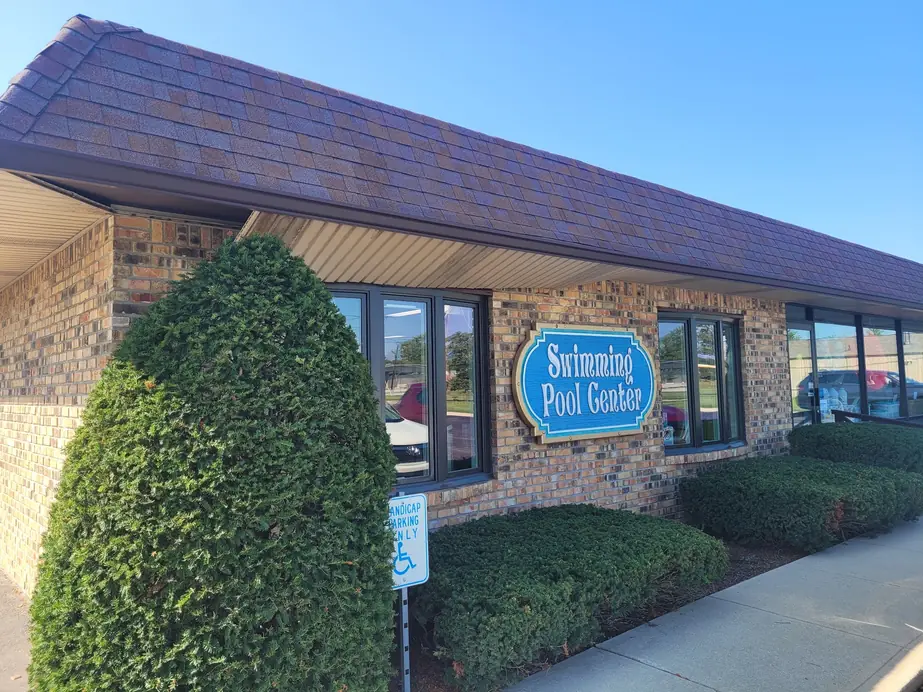
Barker's Swimming Pool Center, at 1565 E Main St in Brownsburg, has been family owned and independent since 1980. Bring your sample during store hours and ask for the order of operations. March through October that's Monday to Friday, 9 to 5, and Saturday, 9 to 2. In winter, November through February, it's Monday to Friday, 9 to 4:30. The number is (317) 852-8979.
Barker's Swimming Pool Center, (317) 852-8979
Call (317) 852-8979More articles
Opening Your Pool in Central Indiana: What to Check Before the First Swim
Most spring problems start at the equipment pad, so start there before you add a single chemical.
Closing Your Pool Before an Indiana Winter
Water expands when it freezes, so closing day is mostly about getting water out of places it shouldn't be.