Opening Your Pool in Central Indiana: What to Check Before the First Swim
Most spring problems start at the equipment pad, so start there before you add a single chemical.
October 27, 2026 · 4 min read
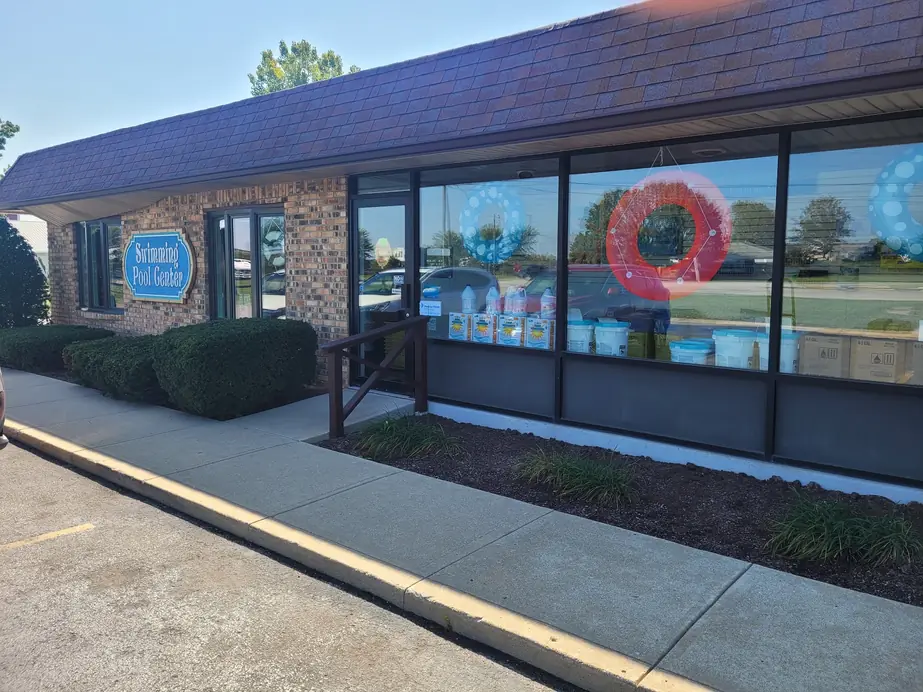
Around Brownsburg, the first warm weekend of spring sends everybody out to look at the backyard. The cover is heavy with water and leaves, the deck is gray from winter, and the swim season, roughly Memorial Day to Labor Day, feels a long way off. It isn't. The weeks before Memorial Day decide whether a pool gets set up right or spends the summer chasing green water. A little order of operations goes a long way.
Clear the cover before you pull it
Get the standing water off the cover first. A small submersible pump does it in an afternoon. Skip this step and the muck on top ends up in the pool when you fold the cover back, and you spend the first week filtering what you could have left in the yard.
Sweep or blow off the loose debris, then pull the cover from one end and fold it as you go. Rinse it with a hose, let it dry in the sun, and store it where mice can't get at it. Check the straps, springs or water bags while you're at it. A cover that's cracked or stretched out is worth knowing about now, not in November.
Walk the equipment pad
Before water moves anywhere, look at the equipment. Check the pump basket and the skimmer baskets for cracks. Look at the pump lid o-ring and the unions for dry, flat or pinched rubber. Put the drain plugs you pulled last fall back where they belong. Freeze and thaw cycles in central Indiana are hard on plastic fittings, so run a hand along the plumbing and look for hairline cracks.
If you need a new o-ring, basket, lid or set of plugs, bring the old part with you. Matching a small part by eye at the counter beats guessing from a description.
Prime the pump, set the valve, start circulation
Fill the pool to the middle of the skimmer opening before you start the pump. A pump that runs dry can ruin its shaft seal in a short time, so don't test it with an empty basket. Fill the pump basket with water, seat the lid, open the valves, and then start it. Watch the basket fill and the pressure gauge settle.
If you have a sand filter with a multiport valve, shut the pump off every time before you move the handle. Turning it with the pump running is how internal gaskets get damaged. Run Backwash until the sight glass clears, then Rinse for a short while, then set it to Filter. Rinse matters because it settles the sand bed so it doesn't send a puff of sand back into the pool.
Write down the pressure on the gauge when the filter is clean. That number is your baseline for the whole season. When the gauge climbs several pounds above it, the filter needs backwashing.
Run the pump for a day or so before you test or treat. Moving water mixes evenly, so your first test reflects the whole pool and not just the spot where you dipped the strip. Brush the walls and floor once the water is moving, and vacuum out what settled over the winter.
Then test. As a general guide, most pools do well with pH between 7.2 and 7.8, free chlorine in the low single digits of parts per million, and total alkalinity somewhere around 80 to 120. Those are general ranges, not a recipe. The right target depends on your pool's surface and sanitizer, and that's a good question for the counter.
Bring a water sample, not a guess
A home kit is fine for week-to-week checks. For the opening, a store test usually tells you more, because it covers things strips miss, like metals, hardness and stabilizer. Scoop water from about elbow depth, away from the skimmer and the returns, into a clean bottle. Bring it in the same day if you can.
Paul Zielinski wrote in a Google review about getting his water tested at Barker's: "Barker's has best advice for maintaining pool water." That's the point of a sample test. A good one ends with advice, not just a sheet of numbers: what to add, in what order, and what to wait on.
Shock, then wait
Once the water is balanced, most pools get a shock treatment at opening to burn off whatever built up under the cover. Add it at dusk, since sunlight eats chlorine. Follow the label on the product you buy, because strengths vary. Keep the pump running overnight and test again before anyone swims.
- Cover off, cleaned, dried and stored
- Baskets, o-rings, unions and plugs checked or replaced
- Water level at mid-skimmer
- Pump primed, multiport valve moved only with the pump off
- Pressure baseline written down
- Water tested after a day of circulation
- Shock added at dusk, retest in the morning
If the water is still green after a few days of running, don't keep adding chemicals blindly. Bring a sample in and find out what's actually off.
When to stop by
Barker's Swimming Pool Center is at 1565 E Main St in Brownsburg, a family owned shop that has served the area since 1980. March through October the store is open Monday to Friday, 9 to 5, and Saturday, 9 to 2. Chemicals, covers, pumps and filters, and testing supplies are on the shelf, and if something isn't in stock they'll order it and have it delivered quickly. Call (317) 852-8979 with questions before you make the trip.
Barker's Swimming Pool Center, (317) 852-8979
Call (317) 852-8979More articles
What a Pool Water Test Actually Tells You, and Why to Bring a Sample
A test is only useful if the sample is good and the next step is clear.
Closing Your Pool Before an Indiana Winter
Water expands when it freezes, so closing day is mostly about getting water out of places it shouldn't be.